
Products
Abrasives and cleaning products for stainless steel: satin finishing, polishing, pickling
Abrasives and cleaners for stainless steel: discs, wheels, compounds and pickling gel for satin finishing, polishing and pickling.

Abrasives for stainless steel
Cleaning and polishing
We work with customers from all over Albania.
Request a quote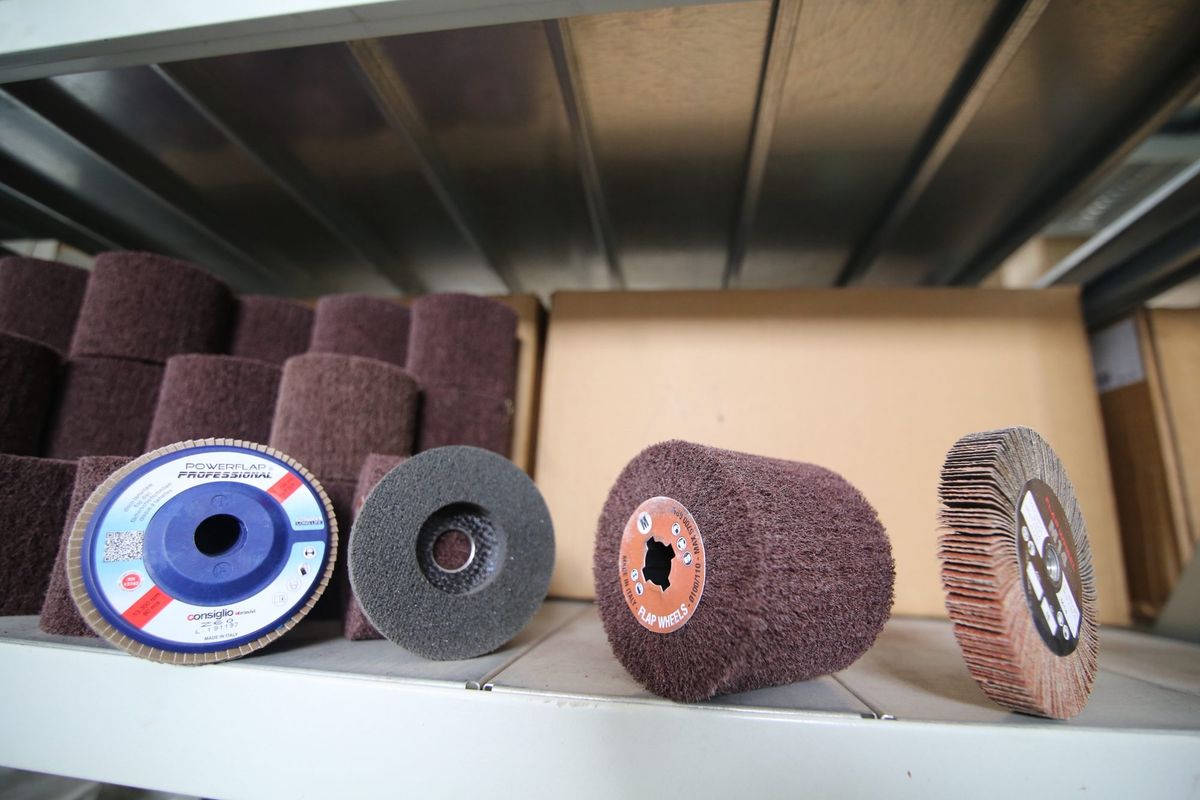
Flap wheels
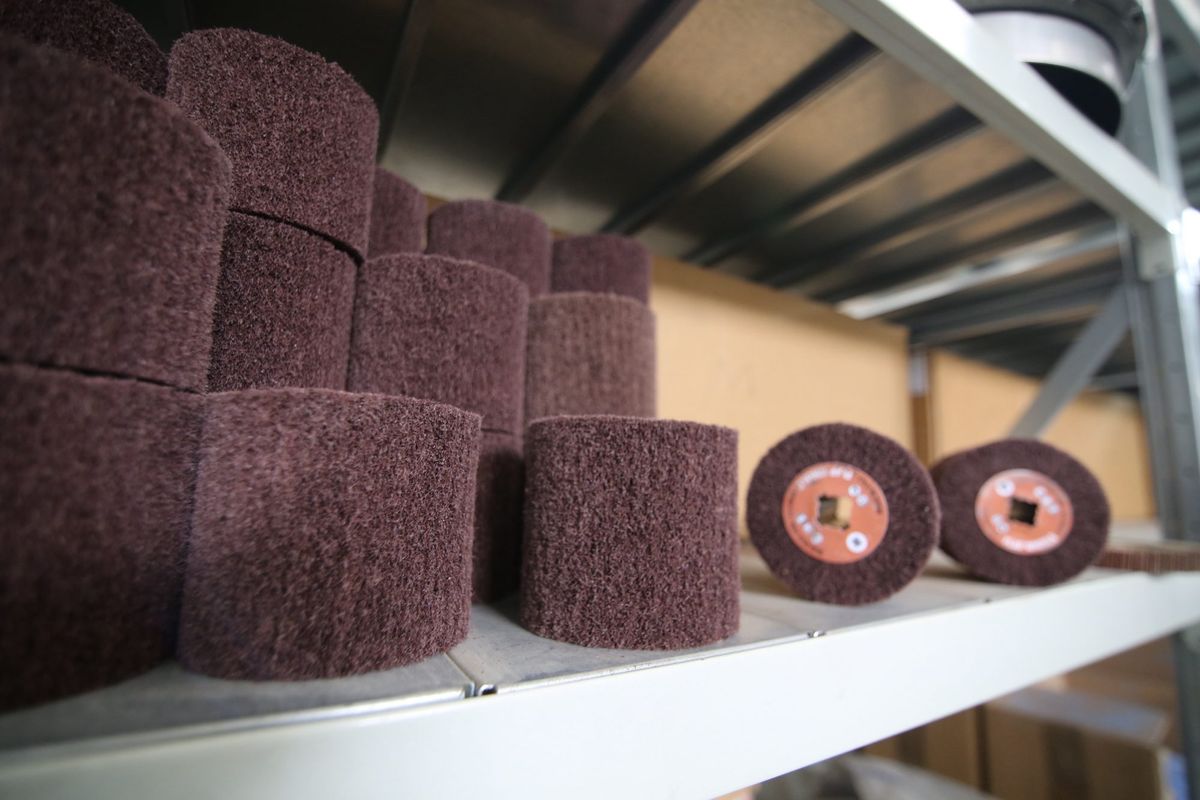
Non-woven drums for satin finishing
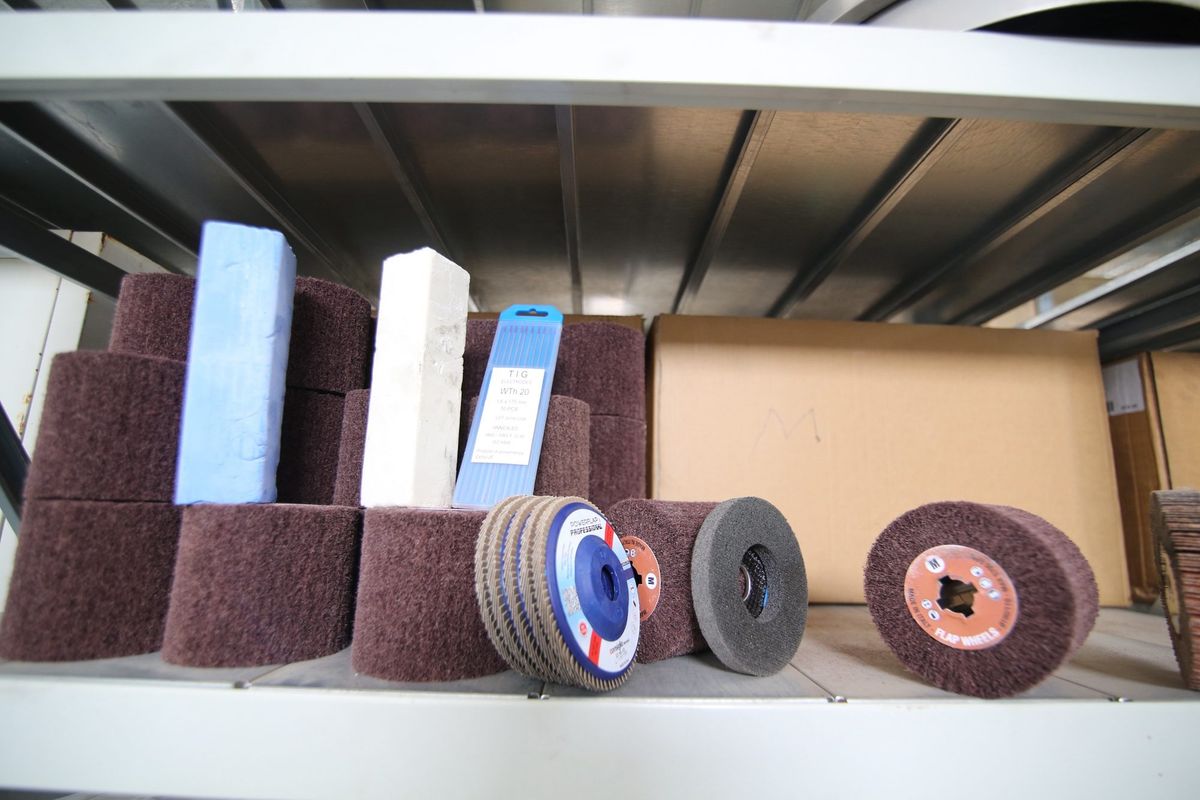
Polishing compounds and TIG electrodes


Technical specifications – Abrasives & cleaners for stainless steel
| Product type | Use |
|---|---|
| Flap discs | Grinding and preparation for satin finishing |
| Abrasive belts | Tube and sheet satin finishing |
| Flap wheels and non-woven abrasive wheels/drums | Surface preparation and uniform satin finishing |
| Unitized discs | Fine finishing for polishing |
| Abrasive / polishing compounds | Polishing to a mirror finish |
| Pickling gel for welds | Removal of weld heat tint |
| Use | Stainless workshops, railings, catering equipment, furniture |
Dimensions in stock change every week. Contact us for dimensions in stock.
More information – Abrasives & cleaners for stainless steel
Satin finishing of tubes and sheets
Flap discs, abrasive belts and non-woven abrasive wheels or drums are used to prepare and satin finish stainless surfaces. Discs help smooth areas that need preparation, while belts and drums suit tube and sheet satin-finishing processes. For a uniform appearance, maintain the working direction and check the match with adjacent surfaces. At Italinox we use the same products in our own tube and sheet satin finishing. The choice depends on the material, the tool and the appearance you want to achieve, rather than simply choosing a disc for every task.
Polishing to a mirror finish
Unitized discs, flap wheels and abrasive or polishing compounds support the stages of working towards a smooth, reflective surface. Mirror polishing requires surface preparation before the final finish: polishing compound does not replace removing marks left by earlier grinding. Combine the products according to the working stage and check the result on a trial area. This helps match the appearance of parts for railings, catering equipment and stainless furniture. The initial surface condition determines which preparation steps are needed before the final polishing stage.
Weld pickling
Pickling gel for welds removes the heat tint created during welding and helps restore corrosion resistance. This treatment has a different purpose from satin finishing or polishing: it targets the weld area and surface oxides. Use it according to the product instructions, not as an everyday cleaning product. After treatment, follow the rinsing requirements and inspect the surface before continuing with the finish. Select the treatment for the condition of the weld rather than assuming that a shiny surface alone means the weld area has been properly treated.
Abrasives dedicated to stainless steel only
Use abrasives dedicated to stainless steel only: iron particles left from working ordinary carbon steel can transfer to the surface and cause rust spots. Keep stainless discs, belts and wheels separate from those used on iron. Before starting, check that both the work surface and the tools are clean. For pickling gel, follow the technical data sheet and safety instructions, including personal protection and rinsing. Italinox technical assistance helps you match the product to the process and the finish your work requires, rather than treating every surface in the same way.
Typical applications
- Tube and sheet satin finishing
- Polishing stainless railings and accessories
- Finishing catering equipment and furniture
- Weld pickling in stainless workshops
Frequently asked questions
Which disc should I use for satin finishing?
The choice depends on the surface condition and the tool you use. Flap discs are for grinding and preparation; uniform satin finishing may need belts or non-woven wheels/drums. Tell us about the job for technical assistance.
Why do rust spots appear after grinding stainless steel?
Iron particles from abrasives or tools previously used on ordinary carbon steel can contaminate stainless and cause rust spots. Use abrasives dedicated to stainless steel only and keep them separate.
Should a weld be pickled?
When a weld has heat tint, pickling gel removes it and helps restore corrosion resistance. Follow the product's technical data sheet and safety instructions; mechanical polishing does not have the same purpose.
Do you use these products in your own work?
Yes, we use the same products in our own tube and sheet satin finishing. Tell us the material, the current surface condition and the desired finish for technical assistance with choosing an abrasive.
Related categories


Same-day quotes with technical assistance
Send us the grade, dimensions and quantity, or your drawing. We reply today with a quote and availability.